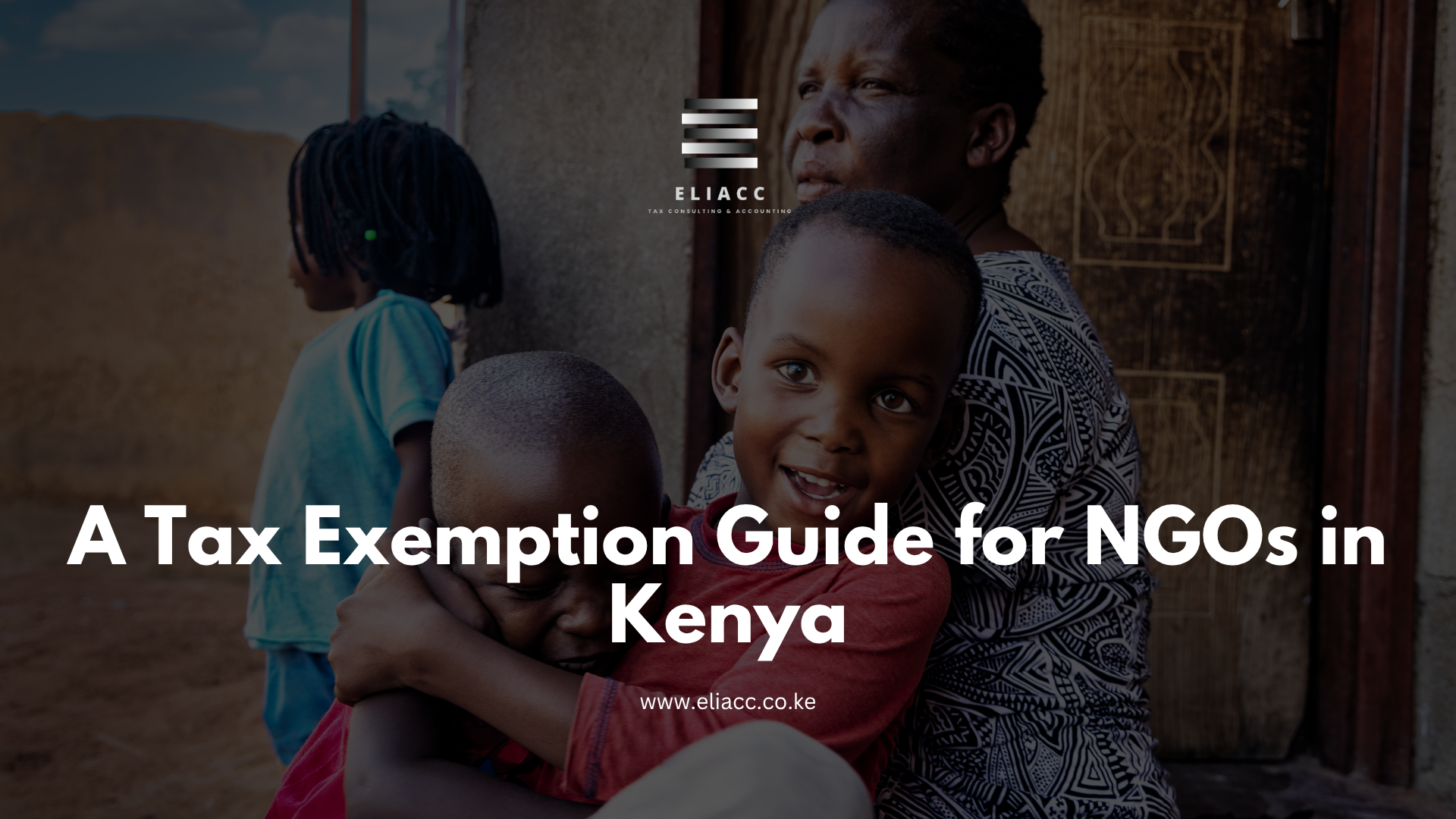
Charitable and nonprofit organizations play a vital role in Kenya’s economic and social development. From healthcare initiatives to education programs and environmental conservation, these institutions deliver essential public benefits.
However, many organizations are unaware that tax exemption is not automatic, even when they operate purely for charitable purposes. Without formal exemption approval from the Kenya Revenue Authority, a nonprofit may remain legally liable for income tax and other tax obligations.
Recent regulatory developments under the Income Tax (Charitable Organisations and Donations Exemption) Rules, 2024 have significantly changed the compliance landscape. Organizations must now meet higher governance, transparency, and reporting standards to obtain and maintain tax-exempt status.
For nonprofits, foundations, and charitable trusts, obtaining and maintaining tax exemption is no longer merely a procedural task, it is a strategic governance requirement.
Understanding Tax Exemption for Charitable Organizations in Kenya
Tax exemption allows qualifying organizations engaged in public benefit activities to operate without paying income tax on funds applied to charitable purposes.
However, eligibility is strictly regulated. Organizations must demonstrate that:
- Their primary purpose is charitable or public benefit.
- Income and assets are applied solely to charitable activities.
- No profits or assets are distributed to members, directors, or trustees.
- Governance structures ensure accountability and transparency.
- Financial reporting meets acceptable regulatory standards.
Failure to meet these requirements may result in application rejection, revocation of exemption, or tax exposure during compliance reviews.
The Strategic Importance of Tax Exemption
For charitable organizations, tax exemption provides more than regulatory compliance. It enables operational efficiency and donor confidence.
Key advantages include:
1. Protection From Corporate Income Tax
Organizations without exemption may be taxed on income such as grants, donations, or program revenues. Tax exemption protects resources intended for public benefit.
2. Enhanced Donor Confidence
Donors, development partners, and institutional funders often prefer supporting organizations that have formal tax-exempt status and demonstrate strong governance.
3. Improved Grant Eligibility
Many international donors require proof of tax compliance and exemption certification before approving funding.
4. Stronger Governance and Accountability
The exemption application process itself forces organizations to establish clear financial reporting and governance structures.
The Tax Exemption Application Process
Obtaining exemption requires a structured submission to the Commissioner of Domestic Taxes at the Kenya Revenue Authority.

The process typically involves the following stages:
1. Eligibility Assessment
Organizations must first confirm that their activities fall within recognized charitable purposes such as:
- Poverty alleviation
- Education and research
- Religious activities
- Healthcare services
- Environmental conservation
- Community development initiatives
Importantly, benefits must be directed primarily toward residents of Kenya.
2. Governance and Structural Review
Regulators carefully evaluate the organization’s governance framework.
This includes reviewing:
- Constitution, trust deed, or memorandum and articles
- Board composition and governance procedures
- Conflict-of-interest safeguards
- Asset distribution clauses
A key requirement is that assets must remain dedicated to charitable purposes even in the event of dissolution.
3. Financial Transparency Requirements
Financial transparency is a central component of the application process. Organizations are typically required to provide:
- Audited financial statements
- Bank statements covering multiple financial periods
- Detailed asset registers
- Evidence of expenditure on charitable activities
This allows regulators to confirm that funds are genuinely applied to public benefit.
4. Operational and Impact Reporting
Beyond financial data, organizations must demonstrate actual charitable impact. Regulators assess:
- Programs implemented
- Target beneficiaries
- Geographic areas served
- Community impact evidence
This stage ensures that exemption is granted only to organizations delivering measurable public benefit.

5. Application Review and Approval
Once submitted, the application undergoes regulatory review by the Kenya Revenue Authority. If approved:
- A Tax Exemption Certificate is issued.
- The certificate is typically valid for five years.
- Renewal applications must be submitted prior to expiry to avoid loss of exemption status.
Common Compliance Risks for Nonprofits
Many organizations assume that nonprofit registration automatically grants tax exemption. This misconception often leads to significant compliance gaps. Typical issues encountered include:
Incomplete Financial Records
Organizations without audited financial statements often face application delays or rejection.
Weak Governance Frameworks
Lack of clear governance structures or conflict-of-interest policies may raise regulatory concerns.
Improper Use of Funds
Where funds appear to benefit private individuals rather than public beneficiaries, exemption may be denied.
Dormant or Inactive Structures
Organizations that are registered but lack evidence of active charitable work may fail eligibility tests.
Which Organizations Should Apply for Tax Exemption?

Several categories of organizations benefit significantly from obtaining tax exemption:
Non-Governmental Organizations (NGOs)
Local and international NGOs operating in Kenya often require exemption to maintain funding eligibility.
Foundations
Family foundations and corporate philanthropic entities typically require exemption to structure grant-making activities effectively.
Faith-Based Organizations
Religious institutions operating charitable programs frequently qualify but may require professional assistance in meeting documentation standards.
Charitable Trusts
Trusts established for scholarships, healthcare assistance, or community development projects often require exemption to operate efficiently.
Social Impact Organizations
Environmental initiatives, education programs, and conservation projects commonly pursue exemption to maximize funding impact.
Maintaining Tax-Exempt Status
Obtaining exemption is only the beginning. Organizations must maintain continuous compliance to avoid revocation. Key obligations include:
- Maintaining accurate financial records
- Filing tax returns where required
- Ensuring funds are used solely for charitable purposes
- Updating regulators on governance changes
- Renewing exemption certificates before expiry
Failure to comply may result in withdrawal of exemption and potential tax exposure.
Why Professional Advisory Support Matters
Given the increasing regulatory scrutiny surrounding nonprofit tax compliance, many organizations engage professional advisors to manage the exemption process. Professional advisory support typically includes:
- Eligibility and compliance assessments
- Governance structure review
- Preparation of exemption applications
- Financial documentation preparation
- Impact reporting guidance
- Ongoing compliance monitoring
- Renewal and regulatory liaison
For organizations handling substantial donor funding, professional support helps reduce regulatory risk while strengthening institutional credibility.
Strategic Perspective: Compliance as a Governance Advantage
For charitable organizations, tax exemption should not be viewed merely as a regulatory requirement. Instead, it should be treated as part of a broader governance and accountability framework that strengthens institutional sustainability.
Organizations that proactively align with regulatory expectations are better positioned to:
- Attract donor funding
- Build stakeholder trust
- Scale impact programs
- Avoid compliance disputes
In an environment where transparency and accountability are increasingly critical, tax exemption represents both a compliance necessity and a strategic advantage. If your organization is unsure about its exemption status, compliance readiness, or renewal requirements with the Kenya Revenue Authority, now is the time to address it. I work with nonprofits, foundations, and social impact organizations to structure, secure, and maintain tax-exempt status in Kenya with a focus on long-term compliance and institutional strength. Call us today.